AccessAI: Community-driven literacy for a flourishing Charlotte
Artificial intelligence, or AI, is reshaping our world faster than ever imagined. From medical offices and banking institutions to universities and beyond, AI is now used as a tool to accelerate and streamline processes across industries. But is it really simplifying or enhancing our lives – and who gets to be a part of the conversation?
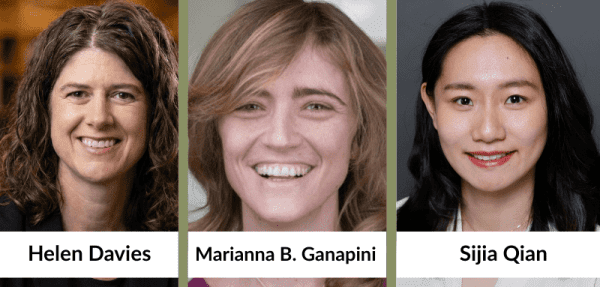
Helen Davies, Marianna B. Ganapini, and Sijia Qian, professors in the College of Humanities & Earth and Social Sciences, as well as the School of Data Science, will take a multidisciplinary dive into the world of AI to bridge the gap between academic discussions of AI and its practical, everyday applications. Through user narratives and experiences external to academia, this group of researchers will study all aspects of AI use, including its environmental impact on communities, ethical considerations, and the importance of public literacy about its benefits and potential pitfalls.
“The way we talk about using AI in academia, doesn’t match the way others talk about it in non-academic contexts,” said Davies. “In higher education, the focus is more on job opportunities and the theoretical impacts of AI, but there is more to uncover.”
Because communities across the city experience AI differently, leading to disparities in opportunity, confidence, and quality of life, their AccessAI project will focus on building fair and accessible AI literacy through research, dialogue, and shared learning. The team will establish a “living lab” or a continuous cycle of community engagement and co-creation. Through this lab, they will analyze digital spaces to understand current AI use, facilitate open community conversations, and co-design AI literacy tools with those who call the city home.
Read the full article on the Charlotte Urban Institute’s news article.