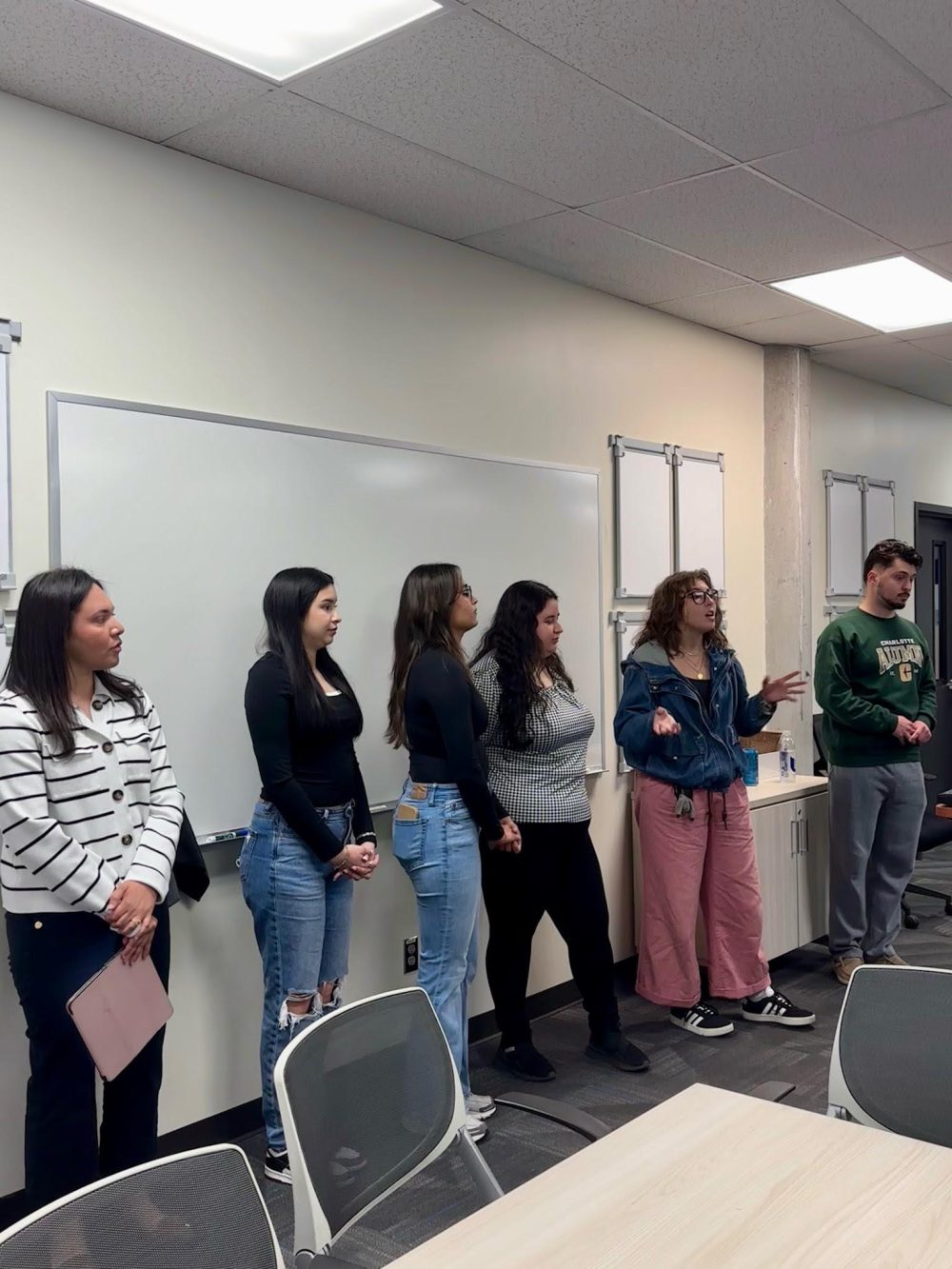
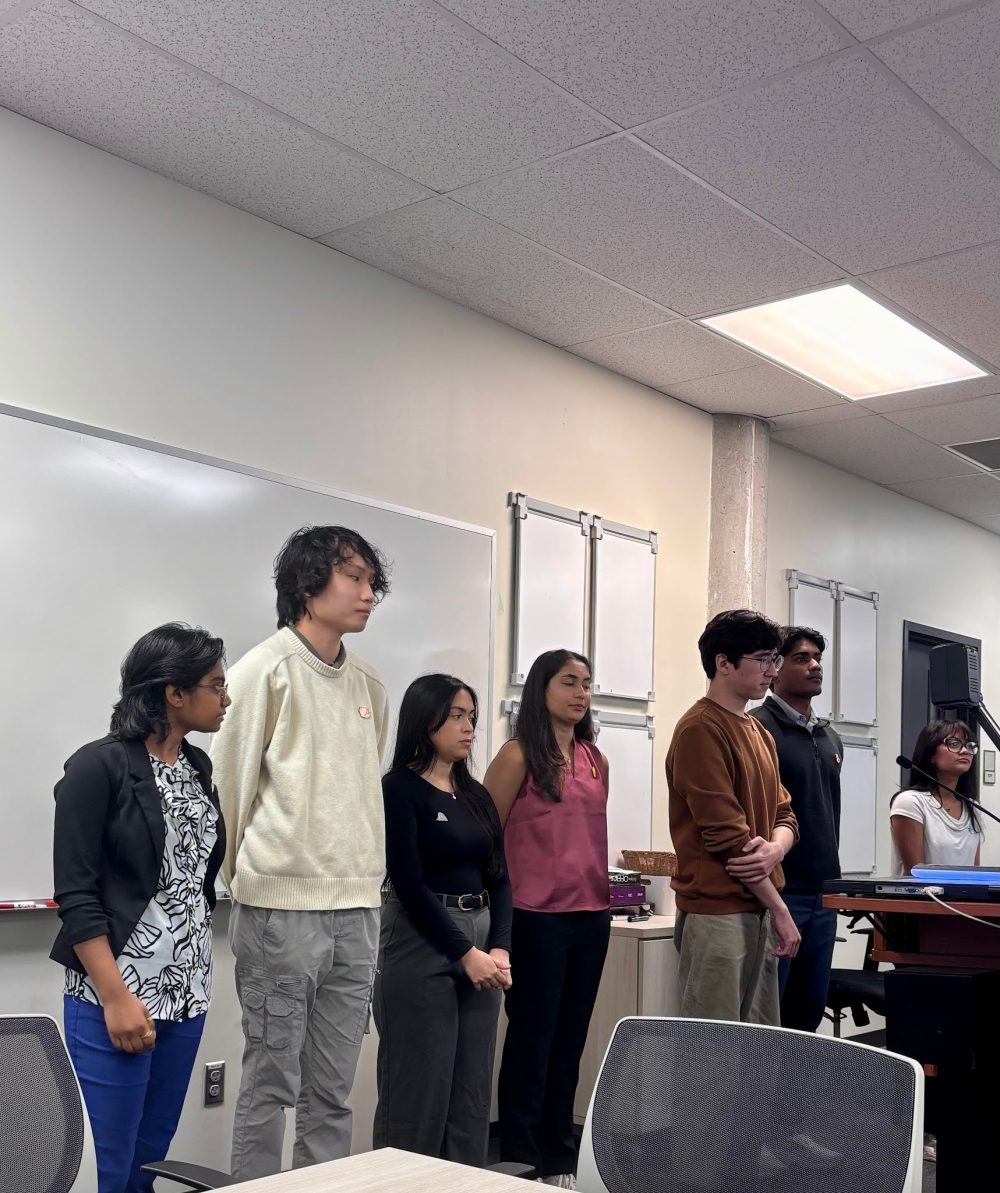
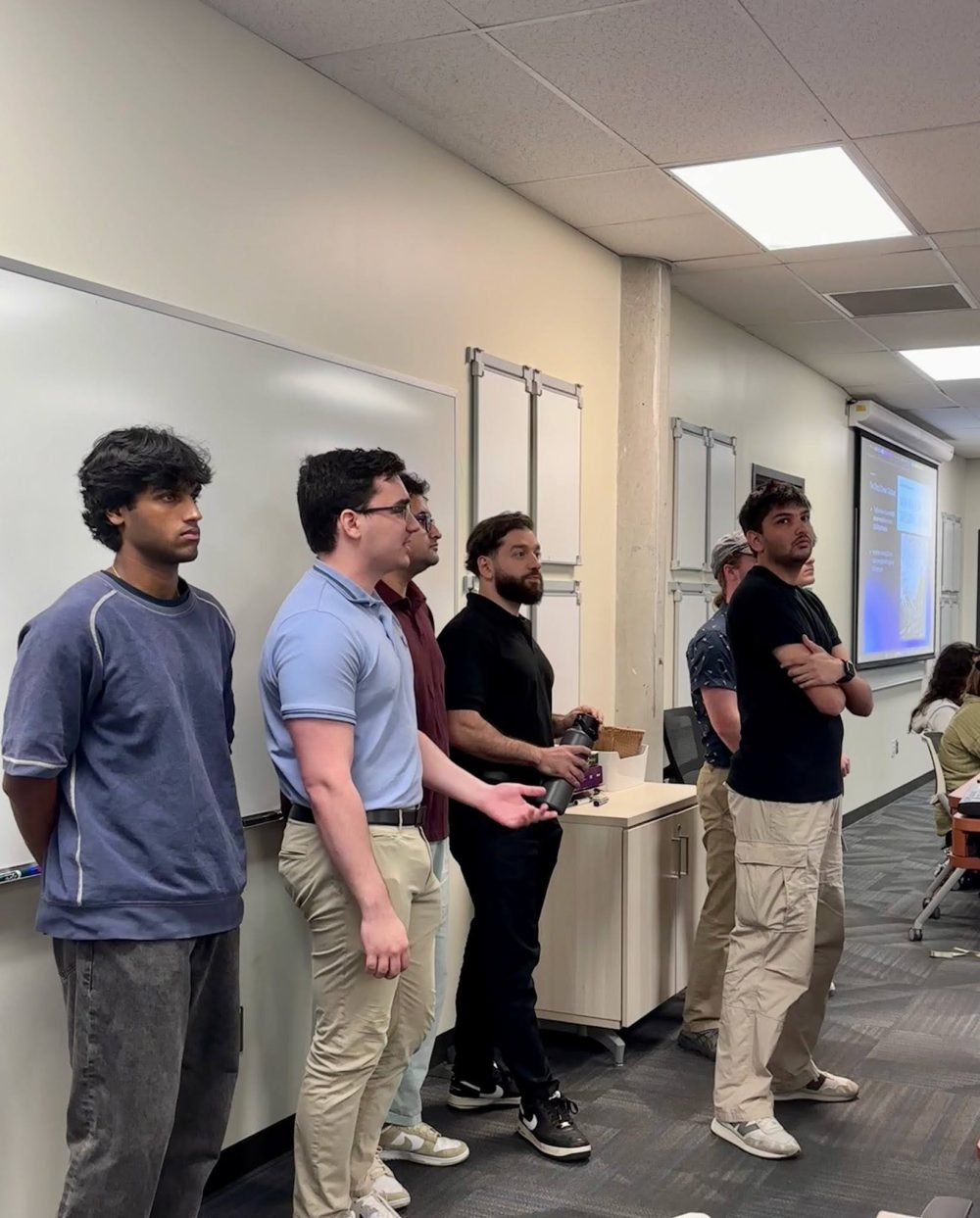
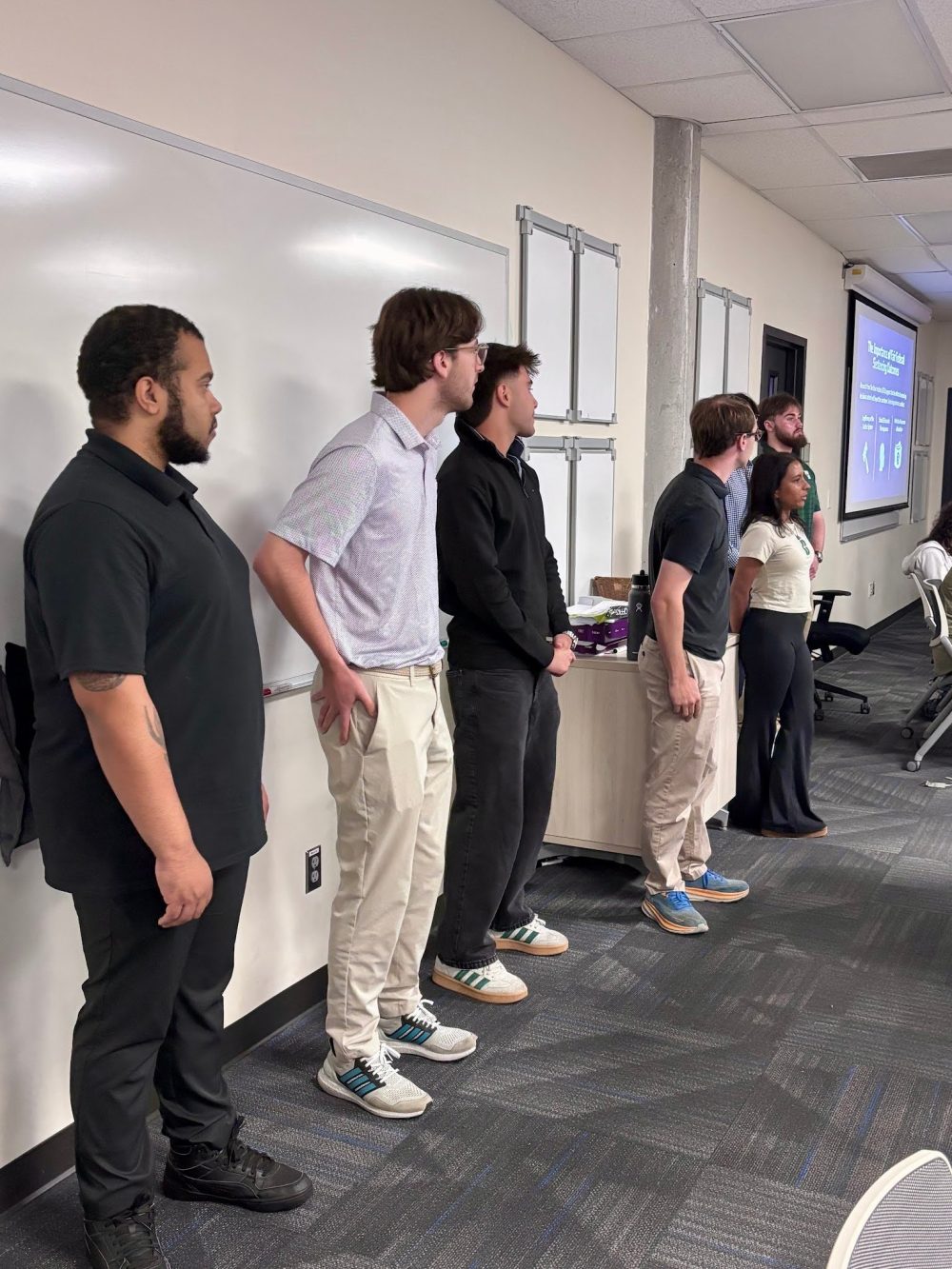
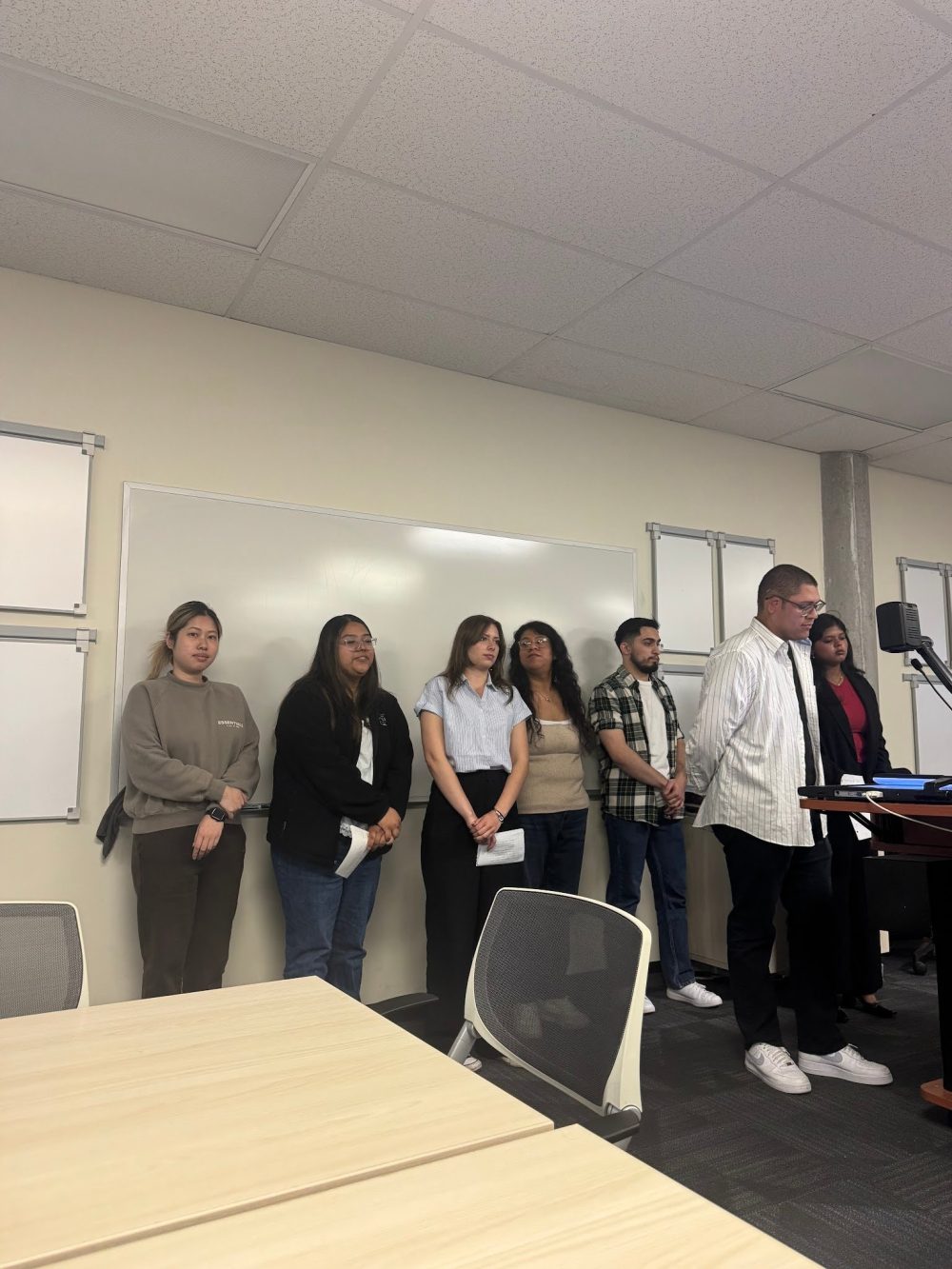
Students in DTSC 4302: Data Science for Social Good showcased how data-driven approaches can be used to better understand and address real-world challenges across a wide range of industries. From natural disasters to criminal justice, each project highlighted the power of data science in creating meaningful social impact.
One group—Wendy Ceja-Huerta, Carolina Rangel Lara, Maria Eduarda Filgueiras De Resende Silva, Jake Fabrizio, Ana Abreu, and Riya Vadadoria—presented “The Bounce Back: Multi-Sector Recovery After Natural Disasters in High-Exposure U.S. States.” Their analysis explored how labor markets respond to natural disasters. They found that while the Midwest experiences fewer disasters overall, states like Florida, Louisiana, and Texas demonstrate stronger recovery patterns due to frequent exposure and preparedness. They also noted that although COVID-19 is not a natural disaster, it significantly impacted labor markets during the same period.
Another group—Shefali Aswal, Jennifer Cotto Miranda, James Holmes, Aditi Mohanty, Daivik Nambiar, and Calvin Zheng—focused on marine mammal strandings in the southeastern United States. By analyzing coastal weather patterns, plankton density (a key food source), and lunar phases that influence tides, they identified environmental factors that may contribute to these events, highlighting how data can support marine conservation efforts.
The “Dream Catcher” project, presented by Soumil Kothari, Aryaman Kachroo, Michael Stelmack, Garrett Swaney, Nickk Greco, Aiden Thomas, and Ahmad Jebril, applied natural language processing (NLP) to analyze recurring themes and emotional patterns in dreams. By building a “structured dream universe,” the team demonstrated how data science can intersect with psychology and potentially support therapists in understanding their patients more deeply.
In the realm of criminal justice, A.J. Beiza, A.J. Clark, Lucas Fierro Ruiz, Austin Hayes, Tyler Komito, Smrithi Murali, and Dylan Wilson presented “Justice for All? A Study of Racial Disparities in U.S. Federal Sentencing.” Their analysis examined sentencing and incarceration patterns, finding disparities in outcomes. Notably, their results suggested that under white judges, Black and Hispanic offenders were more likely to be incarcerated than white offenders. The group also proposed policy recommendations aimed at addressing these inequities.
Finally, the Charlotte Traffic project was presented by Georgia Hussey, Erin Chen, Izaan Khudadad, Jennifer Salazar Castro, Eli Licona Pineda, Juanita Salinas-Silva, and Dhanya James. Their research analyzed road infrastructure, environmental conditions, and socioeconomic factors affecting road safety. Key findings included that fog contributes to 83–90% of visibility-related crashes and that wider roads are associated with higher crash rates—potentially due to increased driver confidence and risk-taking. They also explored disparities in road conditions across different neighborhoods.
Overall, these presentations demonstrated the versatility of data science as a tool for social good. By combining technical analysis with real-world applications, students uncovered insights that not only deepen understanding but also point toward actionable solutions.